The CB Radio Community: Why the Hobby Is Thriving Again
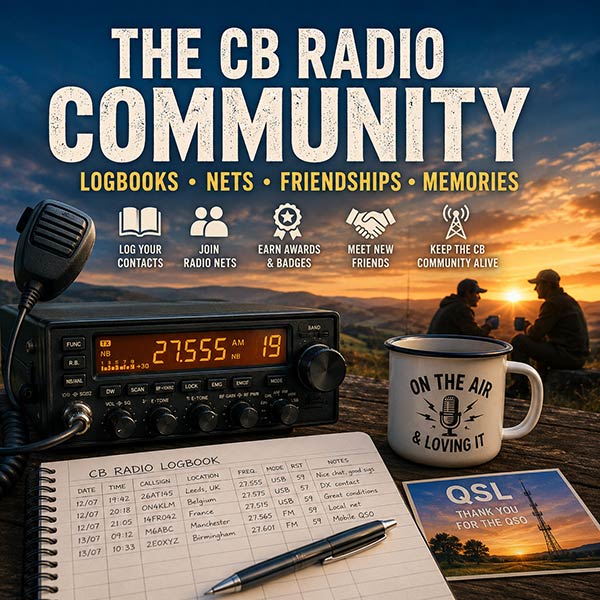
For more than half a century, CB radio has connected people who may otherwise never have met. From lorry drivers sharing traffic reports to hobbyists chasing long-distance DX contacts, the appeal of Citizens' Band radio has always extended far beyond the equipment itself. While antennas, microphones and radios often dominate discussions, it is the people behind the microphones that have kept CB alive through changing technology and changing times.
Today, many people assume CB radio disappeared with the arrival of mobile phones and the internet. The reality is quite different. Across the UK and around the world, thousands of operators are still active every day. Some enjoy local chats with friends, while others spend hours chasing rare long-distance contacts during favourable propagation conditions. Newcomers are discovering the hobby alongside operators who first picked up a microphone during the CB boom of the late 1970s and 1980s.
Modern technology has actually strengthened many aspects of the hobby. Social media groups help people find local operators, online communities advertise radio nets, digital QSL cards complement traditional paper cards, and online logbooks make it easier than ever to record memorable contacts. Rather than replacing radio, these tools support it.
One excellent example is CB Radio Logbook, which allows operators to record contacts, collect achievements, exchange digital QSL cards, discover other operators and keep a permanent record of their radio journey. It combines the traditions of classic CB operating with modern convenience while keeping the focus where it belongs—on making contacts and enjoying the hobby.
Whether you've just bought your first CB radio or you're returning after decades away, becoming part of the CB community is one of the most rewarding aspects of the hobby. This guide explores why the community remains so special, why every operator should keep a logbook, and how friendships formed over the airwaves often last a lifetime.
What Makes the CB Radio Community Special?
Unlike many hobbies, CB radio has always been about communication first and equipment second. Owning the most expensive radio or the tallest antenna doesn't guarantee enjoyable conversations. Instead, what matters most is the willingness to join in, be respectful and enjoy talking to people from all walks of life.
On any given day you might speak to:
- A retired engineer.
- A delivery driver.
- A farmer working in the countryside.
- A motorhome enthusiast travelling Europe.
- A family enjoying portable operation while camping.
- A new operator making their very first contact.
- A seasoned DX enthusiast with decades of experience.
Very few hobbies naturally bring together such a diverse group of people. Age, profession and background become largely irrelevant once somebody keys the microphone. On the radio, everyone is simply another operator.
A Hobby Built Around Conversation
Unlike social media, where conversations are often rushed or anonymous, radio encourages genuine interaction. Operators often spend twenty or thirty minutes discussing everything from radio equipment and antennas to weather, travel, motorsport, camping or everyday life.
Many regular operators become familiar voices long before they ever meet in person. Handles become recognisable, operating styles become familiar and friendships develop naturally over repeated contacts.
These friendships frequently continue away from the airwaves through organised events, club meetings and online communities.
Helping New Operators
One of the strengths of the CB community is its willingness to help beginners.
New operators regularly receive advice on subjects such as:
- Choosing an antenna.
- Improving installation quality.
- Reducing electrical interference.
- Understanding propagation.
- Learning radio etiquette.
- Operating Single Sideband (SSB).
- Making their first DX contact.
Experienced operators remember what it was like to make their own first call, and many are more than happy to guide newcomers through the learning process.
If you're new to CB radio, don't be afraid to ask questions. Most operators are delighted to help someone discover the hobby.
Local Conversations and Worldwide Contacts
One of CB radio's greatest attractions is that every day is different.
On one evening you may spend an hour chatting with operators within ten miles of your home. A few days later, favourable atmospheric conditions may allow you to speak to stations hundreds or even thousands of miles away across Europe.
This unpredictability keeps the hobby exciting.
Many operators enjoy both:
- Local FM conversations with nearby friends.
- Long-distance SSB DX contacts.
The combination of reliable local communication and the possibility of extraordinary long-distance contacts gives CB radio a unique appeal that internet-based communication simply cannot replicate.
A Shared Passion
CB operators often develop friendships because they share similar interests beyond radio itself.
Common interests include:
- Camping and caravanning
- Classic vehicles
- Off-road driving
- Motorcycling
- Preparedness
- Electronics
- Engineering
- Photography
- Walking and outdoor activities
It isn't unusual for a conversation that begins with signal reports to finish discussing holidays, family, classic cars or the latest antenna experiment.
The Spirit of Respect
Every hobby has its occasional difficult characters, but the overwhelming majority of CB operators value respectful communication.
Good operating practice includes:
- Waiting your turn.
- Listening before transmitting.
- Welcoming newcomers.
- Avoiding unnecessary interference.
- Helping others improve.
- Keeping conversations enjoyable.
These unwritten rules have helped maintain a friendly atmosphere on CB radio for generations.
Why Every Operator Should Keep a Logbook
Long before smartphones and cloud storage existed, radio operators kept notebooks beside their radios.
Every memorable contact, every DX station and every interesting conversation was carefully written down by hand. These logbooks became far more than simple records—they became personal histories of each operator's journey through the hobby.
Although technology has changed dramatically, the reasons for keeping a logbook remain exactly the same.
Remembering Your Contacts
It's surprising how quickly memorable conversations begin to blur together.
Without a logbook, it's easy to forget:
- Who you spoke to.
- When the contact took place.
- Which frequency you were using.
- What equipment produced the best results.
- Where the other operator was located.
Keeping accurate records allows you to revisit conversations months or even years later.
Tracking Your Radio Journey
Every operator reaches milestones throughout their time on CB radio.
Your first contact.
Your first mobile QSO.
Your first overseas station.
Your longest DX contact.
Your first successful SSB conversation.
Without recording these achievements, many are eventually forgotten.
A logbook creates a timeline of your progress and reminds you just how far you've come as an operator.
Monitoring Propagation
Operators interested in DX often use logbooks to identify propagation patterns.
Recording information such as:
- Time of day
- Solar conditions
- Weather
- Band conditions
- Countries worked
helps build a picture of when certain paths are most likely to open.
Over time these records become surprisingly valuable.
Organising QSL Cards
If you exchange QSL cards, a logbook becomes invaluable.
You can quickly identify:
- Cards sent.
- Cards received.
- Outstanding confirmations.
- Special event stations.
- Rare contacts.
Many experienced operators have collections spanning decades, all organised using detailed logbooks.
Paper or Digital?
| Paper Logbook | Digital Logbook |
|---|---|
| Traditional feel | Accessible anywhere |
| No batteries required | Search contacts instantly |
| Handwritten memories | Automatic statistics |
| Simple to use | Maps and achievements |
| Limited sharing | Share contacts with friends |
Many operators still enjoy writing in a notebook, while others prefer the convenience of digital logging.
CB Radio Logbook brings together many of the advantages of both. Operators can quickly record contacts, view maps of where they've spoken, collect achievement badges, manage digital QSL cards and build a lasting record of their activity—all without losing the traditional spirit of logging every memorable QSO.
Even if you're only making a few contacts each week, keep a log. You'll be amazed how enjoyable it is to look back after a year and see how your radio journey has developed.
What Information Should You Log?
There is no single "correct" way to keep a CB radio logbook. Some operators like to record only the basics, while others capture almost every detail of a contact. The important thing is consistency. The more information you record, the more useful your logbook becomes over time.
Whether you prefer a traditional notebook or a digital platform such as CB Radio Logbook, recording the same core details for every contact makes it much easier to search your history, identify trends and revisit memorable QSOs months or even years later.
Essential Information to Record
| Field | Why It Matters |
|---|---|
| Date | Helps organise contacts chronologically. |
| Time (UTC or Local) | Useful for comparing propagation conditions. |
| Frequency or Channel | Shows where the contact took place. |
| Mode | FM, AM, USB or LSB. |
| Callsign or Handle | Identifies the other operator. |
| Location | Town, county or country. |
| Signal Report | How well you heard each other. |
| Equipment | Radio, microphone or antenna used. |
| Distance | Approximate distance between stations. |
| Notes | Interesting details about the conversation. |
You don't need to fill in every field every time. Even recording the basics creates a valuable history that quickly grows into a personal archive of your time on the air.
Example Logbook Entry
| Item | Example |
|---|---|
| Date | 12 July 2026 |
| Time | 20:18 UTC |
| Channel | 27.555 MHz USB |
| Operator | 26AT145 – Steve |
| Location | Leeds, West Yorkshire |
| Signal | 5/7 both ways |
| Equipment | CRT SS9900 with Sirio antenna |
| Notes | Excellent evening conditions. Discussed antenna upgrades and upcoming local radio net. |
As your log grows, you'll begin spotting familiar handles, favourite frequencies and periods of particularly good propagation. Looking back through old entries is often just as enjoyable as making new contacts.
Digital logbooks make searching much easier. Instead of flicking through dozens of notebook pages, you can instantly find every contact you've ever made with a particular operator or location.
Radio Nets Explained
If you've listened to CB radio for any length of time, you've probably heard the term radio net. For newcomers it can sound rather formal, but in reality a radio net is simply an organised gathering of operators using an agreed channel at an agreed time.
Rather than everyone talking over one another, participants take turns, ensuring everybody has an opportunity to join the conversation.
Radio nets have been part of CB culture for decades and remain one of the best ways to meet local operators, improve your confidence behind the microphone and become part of the wider community.
Why Do Radio Nets Exist?
A net gives operators a reliable place to meet. Instead of hoping somebody is listening, everyone knows where and when to gather.
Benefits include:
- Meeting local operators.
- Welcoming newcomers.
- Testing equipment.
- Sharing propagation reports.
- Passing local information.
- Building friendships.
- Keeping quieter areas active.
For operators who live in areas with relatively little day-to-day activity, a weekly net may be the highlight of their radio calendar.
The Role of the Net Controller
Most organised nets are led by a Net Controller (sometimes called a Net Control Station or NCS).
The controller's job is to keep the conversation flowing and make sure everyone gets a chance to contribute.
Typical responsibilities include:
- Opening the net.
- Calling for check-ins.
- Keeping a list of participants.
- Inviting each operator to speak.
- Managing interruptions.
- Closing the session.
A good controller helps even nervous first-time operators feel comfortable joining in.
Typical Net Format
- The controller announces the start of the net.
- Operators check in with their handle or callsign.
- Each participant gives a short report.
- The controller invites comments or discussion.
- Late arrivals are welcomed.
- The net closes with final announcements.
The structure keeps conversations organised while still remaining friendly and relaxed.
Different Types of Radio Net
| Type | Purpose |
|---|---|
| Local Net | Neighbouring towns and counties. |
| Regional Net | Operators across a wider area. |
| National Net | Large organised gatherings across the country. |
| DX Net | Long-distance contacts during favourable conditions. |
| Friendship Net | Regular informal chats between familiar operators. |
| Event Net | Special occasions, rallies or charity events. |
Joining Your First Net
Many newcomers worry they'll say the wrong thing. In reality, joining a net is straightforward.
- Listen for a few minutes before transmitting.
- Wait until the controller asks for check-ins.
- State your handle or callsign clearly.
- Keep your first transmission brief.
- Wait until invited to speak again.
- Enjoy the conversation.
Most nets actively encourage new operators. Introducing yourself is often all it takes to receive a warm welcome.
Many local CB groups now advertise their weekly nets through Facebook groups and digital communities. Platforms such as CB Radio Logbook also make it easier for operators to discover nearby users and arrange regular on-air meetups.
Radio nets are often where lasting friendships begin. After hearing the same voices week after week, operators naturally get to know one another, and many eventually arrange to meet at rallies, club nights or informal "eyeballs"—a tradition we'll explore in the next section.
Awards & Badges
One of the most enjoyable aspects of any hobby is celebrating progress. While CB radio has never been about competition, many operators enjoy setting themselves personal goals and working towards new achievements.
Traditionally these milestones were remembered through handwritten logbooks, QSL card collections or simply personal pride. Today, digital platforms make recognising achievements much easier by awarding badges and tracking progress automatically.
The purpose isn't to "win" CB radio—there's no such thing—but to encourage operators to get on the air, make more contacts and enjoy different aspects of the hobby.
Why Achievements Matter
Achievements provide small goals that keep the hobby interesting.
Instead of simply switching on the radio and hoping for a conversation, an operator might decide to:
- Work their first overseas station.
- Speak to every UK region.
- Try portable operation from a hilltop.
- Join a weekly radio net.
- Collect contacts from multiple countries.
- Experiment with SSB for the first time.
Each achievement encourages operators to try something new while improving their confidence and experience.
Popular Achievement Ideas
| Achievement | Description |
|---|---|
| First Contact | Your very first logged QSO. |
| First DX | Your first international contact. |
| 100 Contacts | Reach one hundred confirmed QSOs. |
| 500 Contacts | A major operating milestone. |
| Worked All UK Regions | Make contacts across the United Kingdom. |
| Worked Europe | Speak to operators across mainland Europe. |
| Night Operator | Log contacts after dark. |
| Mobile Operator | Operate successfully from a vehicle. |
| Portable Operator | Operate away from your home station. |
| SSB Explorer | Complete contacts using Single Sideband. |
| DX Hunter | Regularly log long-distance stations. |
| Net Participant | Take part in organised radio nets. |
Platforms such as CB Radio Logbook make these milestones even more rewarding by automatically awarding digital badges as your activity grows, turning your operating history into a visual journey through the hobby.
Achievements should never become more important than the conversations themselves. The badge is simply a reminder of the enjoyable contacts you've made along the way.
QSL Cards and Confirming Contacts
Long before social media profiles and online contact lists existed, radio operators confirmed successful contacts by exchanging QSL cards.
A QSL card is a postcard-sized confirmation that records details of a radio contact. They typically include:
- The operator's callsign or handle.
- Location.
- Date and time.
- Frequency or channel.
- Signal reports.
- Equipment used.
- A photograph or personalised design.
Receiving a QSL card has always been something special. It transforms a voice heard over the air into a lasting keepsake.
From Postcards to Digital Cards
While many operators still enjoy posting physical QSL cards, digital alternatives have become increasingly popular.
Digital cards offer several advantages:
- Instant delivery.
- No postage costs.
- Easy storage.
- Environmentally friendly.
- Simple sharing.
Many operators enjoy using both methods—sending traditional printed cards for particularly memorable contacts while also exchanging digital confirmations for everyday QSOs.
When combined with a digital logbook, every confirmed contact becomes part of a permanent record that's easy to browse and revisit.
Eyeballs – Meeting Operators in Person
If you've spent any time listening to CB radio, you've probably heard somebody mention an "eyeball".
Despite the unusual name, an eyeball simply means meeting another operator face-to-face after speaking on the radio.
For many people, these meetings become one of the highlights of the hobby.
Where Do Eyeballs Take Place?
Eyeballs can happen almost anywhere.
- Local cafés.
- Pub evenings.
- Radio rallies.
- Camping weekends.
- Convoys.
- Charity events.
- Club meetings.
- Field days.
It's remarkable how often two people who have spoken regularly for months discover they only live a few miles apart.
From Voices to Friends
Meeting another operator in person often strengthens friendships that began over the air.
Operators swap equipment, compare aerial installations, share technical advice and, more importantly, simply enjoy each other's company.
Many lifelong friendships—and even business partnerships—have begun with nothing more than a call of "Breaker..." on a quiet channel.
Building Friendships Through Radio
Perhaps the greatest strength of the CB community is the willingness of operators to help one another.
Whether somebody is struggling to tune an antenna, trying to understand SSB or making their very first transmission, there's usually somebody willing to offer advice.
Over time these helpful conversations naturally become friendships.
A Community That Looks After Its Own
Throughout its history, CB radio has helped people in countless practical ways.
- Providing road information.
- Helping motorists during breakdowns.
- Assisting during severe weather.
- Sharing local knowledge.
- Offering technical support.
- Introducing newcomers to experienced operators.
Even today, when mobile phones are everywhere, there's something uniquely reassuring about hearing familiar voices on the air.
Passing Knowledge to the Next Generation
Many experienced operators actively encourage newcomers to keep the hobby alive.
They share decades of experience covering:
- Operating etiquette.
- Antenna installation.
- Propagation.
- Radio maintenance.
- Portable operating.
- DX techniques.
This willingness to mentor others is one of the reasons CB continues to thrive despite changing technology.
The Return of the CB Community
Although the huge popularity of the early 1980s has never fully returned, there are clear signs that CB radio is enjoying a renewed wave of interest.
Several factors have contributed to this revival.
Nostalgia
Many operators who enjoyed CB during its golden years are returning after decades away. Modern equipment is smaller, performs better and is easier to install than ever before.
A Desire for Real Communication
In a world dominated by social media, many people enjoy conversations that aren't driven by algorithms, notifications or advertising.
CB radio offers spontaneous, real-time conversations with complete strangers who often become friends.
Improved Equipment
Modern radios offer excellent receiver performance, stable SSB operation and improved filtering, making today's equipment far more capable than many classic sets.
The Growth of Online Communities
Facebook groups, YouTube channels, online forums and digital communities have made it easier than ever to find other operators.
Rather than replacing radio, these platforms encourage people to switch their radios on.
Digital Tools Supporting Traditional Operating
Applications such as CB Radio Logbook are helping bridge the gap between traditional radio operating and modern technology.
Operators can:
- Record every QSO.
- Exchange digital QSL cards.
- Discover nearby operators.
- Track awards and achievements.
- View contact maps.
- Take part in community events.
- Build an online profile that complements their on-air identity.
Importantly, these tools don't replace radio—they encourage people to spend more time using it.
The CB community may be smaller than it was during its peak, but today's operators are passionate, welcoming and eager to introduce new people to the hobby. That enthusiasm is helping ensure Citizens' Band radio continues to thrive for years to come.
Coming Up Next
The final section of this guide includes:
- How online communities complement traditional radio.
- How to become part of the CB community.
- Frequently Asked Questions.
- A concluding summary with a call to action.
How Online Communities Complement Traditional Radio
Some people worry that online platforms somehow take away from the traditional CB radio experience. In reality, the opposite is often true. The best online communities don't replace talking on the radio—they encourage it.
It's much easier to switch your radio on if you know other operators will be listening. Online communities make that possible by helping people coordinate activity, advertise events and stay connected when they're away from their radios.
Many operators use online platforms to:
- Arrange local radio nets.
- Advertise portable operating days.
- Organise convoy events and meet-ups.
- Share propagation reports.
- Discuss new equipment.
- Exchange operating tips.
- Welcome newcomers into the hobby.
- Share photographs of stations and antenna installations.
When conditions suddenly open for DX, operators often alert one another online before heading straight to their radios. Likewise, if somebody is organising a weekend net or charity event, social media allows hundreds of local operators to hear about it in advance.
Digital Logbooks Bring the Community Together
Traditional paper logbooks will always have their place, but digital platforms have introduced entirely new ways for operators to interact.
For example, CB Radio Logbook isn't simply somewhere to record contacts. It helps operators become part of a wider community by allowing them to:
- Log contacts from anywhere in the world.
- Build a personal operator profile.
- Collect achievement badges.
- Exchange digital QSL cards.
- View maps of contacts and operators.
- Discover nearby users.
- Take part in community events.
- Track their operating history over months and years.
These features complement what happens on the air rather than replacing it. Every log entry represents a real conversation, every badge marks a genuine achievement and every QSL card celebrates an actual contact.
The healthiest online communities are the ones that encourage members to pick up the microphone. Use online platforms to arrange contacts—then enjoy making them over the air.
How to Become Part of the CB Radio Community
If you're new to CB radio, joining the community can feel intimidating at first. The good news is that most operators remember exactly what it felt like to make their first call and are usually more than happy to welcome new voices.
Becoming part of the community doesn't happen overnight. Like any friendship, it develops naturally over time through regular conversations and shared experiences.
Listen Before You Call
Spend a little time listening to how experienced operators communicate. You'll quickly become familiar with the pace of conversations, common terminology and local operating habits.
Introduce Yourself
When you hear a suitable gap, simply call in with your handle or callsign. You don't need a complicated introduction. A friendly greeting is usually enough to start a conversation.
Join a Local Net
Weekly radio nets are one of the quickest ways to meet multiple operators in your area. Even if you're nervous, checking in with a simple signal report is a great first step.
Keep a Logbook
Recording your contacts helps you remember who you've spoken to and gives you a reason to reconnect with operators in the future.
Exchange QSL Cards
Whether you prefer traditional printed cards or digital versions, exchanging QSL cards is a great way to commemorate memorable QSOs and strengthen connections within the hobby.
Attend an Eyeball
If local operators organise a café meet, rally or camping weekend, consider going along. Meeting people in person often transforms familiar voices into lifelong friends.
Help Others
You don't need decades of experience to contribute. Even sharing your own learning journey can encourage somebody who is just starting out.
The strongest CB communities are built by operators who support one another.
Frequently Asked Questions
Is the CB radio community still active?
Yes. While it isn't as large as it was during the 1980s, thousands of operators are active across the UK and around the world every day. Activity varies by location, but many areas have thriving local communities and regular radio nets.
How do I find local CB operators?
Listen on commonly used local channels, join Facebook groups, attend rallies, participate in radio nets and use community platforms such as CB Radio Logbook to discover operators near you.
Do I need to keep a logbook?
No, but most experienced operators recommend it. A logbook creates a permanent record of your contacts, helps track propagation and makes it easy to remember memorable conversations.
What is a radio net?
A radio net is an organised gathering of operators on a particular channel at a scheduled time, usually coordinated by a net controller who ensures everyone has an opportunity to speak.
What is an eyeball?
An eyeball is simply a face-to-face meeting between radio operators who have previously spoken over the air.
Are QSL cards still popular?
Absolutely. Many operators still collect traditional paper QSL cards, while others enjoy exchanging digital versions alongside their online logbooks.
Can beginners join radio nets?
Yes. Most nets actively welcome newcomers and are an excellent way to gain confidence while meeting local operators.
What achievements can I work towards?
Popular milestones include your first contact, first DX station, operating from portable locations, working different countries and reaching contact milestones such as 100 or 500 QSOs.
Can CB radio help me make new friends?
Definitely. Many lifelong friendships have started with a simple conversation on CB radio. Shared interests and regular on-air chats often lead to meeting in person at rallies, club events and eyeballs.
Is CB Radio Logbook free to use?
Yes. CB Radio Logbook includes a free membership that allows operators to start logging contacts and becoming part of the community, with additional features available through optional premium membership.
Conclusion
At its heart, CB radio has never been about watts, antennas or expensive equipment. Those things certainly help, but they aren't what keeps people returning to the hobby year after year.
The real strength of CB radio lies in its community.
Every conversation, every signal report and every contact represents an opportunity to meet somebody new. Whether you're chatting with a neighbour a few miles away or making a memorable DX contact hundreds of miles across Europe, every QSO adds another chapter to your own radio journey.
Keeping a logbook ensures those moments aren't forgotten. Joining radio nets introduces you to new voices. Exchanging QSL cards preserves memories. Attending eyeballs turns familiar callsigns into real friendships.
Modern platforms such as CB Radio Logbook build on these long-standing traditions by making it easier to record contacts, earn achievements, exchange digital QSL cards, discover nearby operators and celebrate your progress, all while keeping the focus firmly on what matters most—getting on the air and enjoying the hobby.
If you've recently returned to CB radio or are making your very first call, don't just listen from the sidelines. Pick up the microphone, introduce yourself, join a local net, keep a log of your contacts and become part of one of the friendliest communities in radio.
You may start with a single conversation—but there's every chance you'll gain a hobby, a collection of unforgettable memories and friendships that last a lifetime.
Related articles
Join the CB Radio Logbook
Track every QSO, map your contacts, and connect with operators near you. Create your free account and get on the air.
Create your account