The Ultimate Guide to Buying a CB Radio in 2026
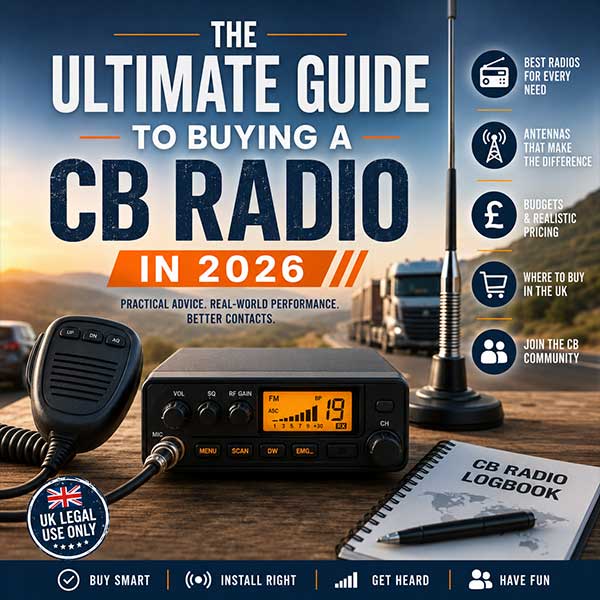
Whether you're returning to the hobby after decades away, buying your very first CB radio, or looking to upgrade an ageing setup, choosing the right equipment has never been easier—or more confusing. The CB radio market in 2026 offers everything from simple plug-and-play mobile radios to feature-packed SSB transceivers capable of making contacts hundreds or even thousands of miles away when propagation conditions are favourable.
At first glance many CB radios appear remarkably similar. They all have a microphone, a channel selector, a volume control and an antenna socket. Yet beneath that familiar appearance are significant differences in performance, features, build quality and intended use. Choosing the wrong radio can leave you frustrated, while choosing the right one can provide years of reliable communication and introduce you to one of the friendliest radio communities in the world.
This guide has been written to help you make an informed decision. Rather than simply listing products, we'll explain exactly what you should be looking for, what you can safely ignore, how much you should expect to spend, and which types of radios suit different operators.
Whether you're installing a radio in your daily driver, equipping a lorry, building a home base station or preparing for outdoor adventures where mobile phones cannot always be relied upon, this guide will help you buy with confidence.
Why People Are Still Buying CB Radios in 2026
Every few years someone claims that CB radio is dead. They point to smartphones, instant messaging and social media as evidence that radio communication has become obsolete.
Then you switch on a CB.
Across the UK you'll still hear local operators chatting every evening. You'll hear truck drivers exchanging traffic information, off-road enthusiasts coordinating convoys, campers keeping in touch across sites, farmers communicating across large estates and hobbyists attempting long-distance DX contacts whenever atmospheric conditions allow.
In fact, CB radio has quietly evolved rather than disappeared.
Modern operators often combine traditional radio communication with online communities, logging software and social platforms. One excellent example is CB Radio Logbook, which allows operators to record contacts, collect badges, participate in scheduled nets and keep a permanent history of their radio activity. Instead of replacing radio, technology has enhanced the hobby.
Today's CB enthusiasts enjoy the best of both worlds:
- Traditional over-the-air communication.
- Digital logging.
- Interactive maps.
- Operator profiles.
- Community events.
- Achievement systems.
- Historical contact records.
Far from disappearing, the hobby continues to attract newcomers every year.
Are CB Radios Still Worth Buying?
For most people considering the hobby, this is the single biggest question.
The short answer is yes.
The longer answer depends entirely on what you expect from your radio.
If you're expecting nationwide communication regardless of terrain without using repeaters or the internet, CB probably isn't the right tool.
If you're looking for reliable local communication, an enjoyable technical hobby, a friendly community and occasional remarkable long-distance contacts through natural propagation, CB radio remains outstanding value.
Reasons People Still Buy CB Radios
No Subscription Costs
Once you've bought your equipment, there are no monthly fees.
No contracts.
No SIM cards.
No network providers.
No usage charges.
Your radio simply works.
Independent Communication
Unlike mobile phones, CB radios don't rely upon cellular infrastructure.
Power cuts.
Network outages.
Congested mobile networks.
None of these prevent two CB operators from talking.
Excellent Community
The CB community remains one of the hobby's strongest assets.
Operators regularly help newcomers tune antennas, troubleshoot installations and understand radio etiquette.
Many lifelong friendships begin with nothing more than a casual "breaker" call.
Unexpected DX Opportunities
When propagation conditions improve, especially during periods of heightened solar activity, operators using perfectly legal UK equipment can speak to stations throughout Europe and occasionally much further afield.
Making your first overseas contact using nothing more than atmospheric conditions remains one of the most exciting moments in radio.
An Enjoyable Technical Hobby
Many operators enjoy improving their stations almost as much as making contacts.
Experimenting with:
- better antennas
- different mounting positions
- coax upgrades
- SWR optimisation
- power supplies
- base station installations
can become a fascinating hobby in itself.
Who Should Buy a CB Radio?
CB radio isn't aimed at just one type of person.
Today's operators come from many different backgrounds.
Drivers
Motorists appreciate immediate local communication without relying on phone coverage.
Many also enjoy chatting with nearby operators during long journeys.
Truck Drivers
Although smartphone navigation has replaced some traditional CB usage, many professional drivers still value instant local information from people actually on the road ahead.
Campers
Holiday parks, convoys and outdoor events are ideal environments for CB radio.
Many families keep several radios to remain in contact around larger sites.
Off-Road Enthusiasts
Green lane groups and 4x4 clubs frequently rely upon CB radios to coordinate vehicles.
Communication is instant and doesn't require mobile coverage.
Preparedness Enthusiasts
Many people include CB radios as part of emergency communication plans because they continue functioning independently of commercial communication networks.
Radio Hobbyists
For some people the enjoyment comes from learning about antennas, propagation and radio operation itself.
CB radio provides an affordable entry into the wider world of radio communications.
What Makes a Good CB Radio?
This is where many first-time buyers become overwhelmed.
Manufacturers advertise dozens of features, but only some genuinely improve your experience.
Let's look at what actually matters.
1. Excellent Receiver Performance
A radio spends most of its life listening rather than transmitting.
A sensitive receiver capable of hearing weak stations clearly is arguably more important than flashy displays or decorative lighting.
Look for radios known for:
- low background noise
- clear audio
- good selectivity
- stable reception
A quality receiver allows you to hear stations that cheaper radios may completely miss.
2. Good Audio Quality
Transmit audio matters.
You want other operators to understand you clearly without sounding muffled or distorted.
Likewise, receiving audio should remain pleasant during long conversations.
Large front-facing speakers generally outperform tiny downward-facing speakers found in compact units.
3. Build Quality
Some radios continue operating perfectly after twenty years.
Others develop faults after only a few seasons.
Quality construction often includes:
- solid microphone connectors
- positive-feeling buttons
- durable rotary controls
- strong chassis construction
- effective heat dissipation
If you regularly drive rough roads or spend time off-road, robust construction becomes even more important.
4. Easy Controls
A good CB radio should be usable without constantly looking away from the road.
Large channel selectors.
Clearly labelled buttons.
Logical menus.
Readable displays.
These seemingly simple details make a huge difference during everyday use.
5. Automatic Squelch
Manual squelch allows you to remove background hiss.
Automatic squelch takes this further by intelligently filtering unwanted noise while allowing genuine signals through.
Many modern radios perform this exceptionally well.
For beginners especially, automatic squelch makes everyday operation considerably easier.
6. RF Gain Control
RF Gain allows you to reduce receiver sensitivity.
That may sound counterintuitive, but in busy areas with many strong nearby stations it can dramatically improve listening quality by reducing overload.
Experienced operators use RF Gain frequently.
Beginners gradually learn its advantages as they become more familiar with radio operation.
7. ANL and Noise Reduction
Vehicle ignition systems, LED lighting, alternators and electrical equipment all generate interference.
Modern CB radios increasingly include:
- Automatic Noise Limiter (ANL)
- Noise Blanker (NB)
- Digital Noise Reduction (DNR)
- Noise Reduction Circuits (NRC)
These features can transform noisy mobile operation into an enjoyable listening experience.
If you spend long periods driving, they're well worth having.
The Most Important Part of Your Entire Station
Many newcomers spend hours comparing radios while almost ignoring the antenna.
This is backwards.
Your antenna has a greater impact on performance than almost any difference between modern CB radios.
A £120 radio connected to an excellent antenna will usually outperform a £300 radio connected to a poor antenna.
If your budget is limited, prioritise:
- A quality antenna.
- Proper installation.
- Correct SWR adjustment.
- Good coaxial cable.
- Then choose the radio.
This single decision often produces the biggest improvement in real-world performance.
Choosing the Right Type of CB Radio
Before comparing individual models, think carefully about how you'll actually use the radio.
Occasional Local Chats
A straightforward FM radio with automatic squelch may be perfect.
Daily Mobile Use
Choose a durable radio with excellent noise reduction and a bright display.
DX Enthusiast
Consider an SSB-capable model with fine frequency stability and high-quality receiver performance.
Limited Dashboard Space
Ultra-compact radios or microphone-integrated control units may suit your vehicle better.
Home Base Station
Larger radios become practical and often provide bigger speakers, more controls and easier operation.
Thinking honestly about your intended use before shopping can prevent expensive mistakes and ensure you buy equipment you'll still enjoy using years from now.
``` ```htmlBest CB Radio for Beginners
Choosing your first CB radio can feel overwhelming. A quick search online presents dozens of radios that all appear to offer similar features, while experienced operators often recommend different models based on their own preferences. The truth is that the "best" beginner CB radio isn't necessarily the most expensive, the most powerful, or the one with the largest display.
A beginner's radio should be straightforward to operate, reliable, easy to install and capable of providing years of enjoyable use as your knowledge grows. Ideally, it should also include enough features that you won't immediately want to replace it after a few months.
Many newcomers make the mistake of either buying the cheapest radio they can find or spending far more than they need on an advanced model with features they'll rarely use. The sweet spot usually lies somewhere in the middle.
What Beginners Should Prioritise
- Simple controls that can be understood without constantly referring to the manual.
- Excellent receive audio.
- Automatic squelch or ASC.
- Reliable UK and European channel support.
- A clear display that's easy to read while driving.
- Good build quality from a reputable manufacturer.
- Availability of spare microphones and accessories.
Modern CB radios have become significantly easier to use than many older models. Automatic squelch systems, better filtering and improved displays remove much of the learning curve that operators experienced during the 1980s and 1990s.
Recommended Beginner Radios
President Barry II ASC
The President Barry II continues to be one of the easiest radios to recommend for beginners.
It offers excellent receive quality, automatic squelch that genuinely works well, straightforward controls and impressive build quality. The menus remain uncluttered, allowing new operators to concentrate on making contacts rather than navigating complicated settings.
Despite being beginner-friendly, it's also a radio that many experienced operators happily continue using for years.
Thunderpole T-800
Thunderpole have built a strong reputation within the UK CB market, and the T-800 represents excellent value for those entering the hobby.
It includes modern features without becoming overly complicated and provides dependable day-to-day performance.
Midland M-Mini USB
If dashboard space is limited, compact radios like the Midland M-Mini offer surprisingly capable performance in an incredibly small package.
Although physically tiny, they still provide clear communication and are ideal for modern vehicles where space behind the dashboard is increasingly restricted.
Don't Chase Features You Won't Use
It's tempting to believe that more buttons automatically mean a better radio.
In reality, many experienced operators use only a handful of controls during everyday operation:
- Volume
- Squelch
- Channel selector
- RF Gain
- Scan
Everything else is occasionally useful but rarely essential.
Buying a radio because it has twenty additional menu options often adds complexity without improving your enjoyment.
Best CB Radio for Cars
Cars present a different set of challenges compared to larger vehicles.
Modern dashboards provide less spare space than older vehicles, while increasingly sophisticated electronics create additional sources of interference. Choosing a suitable radio therefore involves more than simply selecting one with the best specification sheet.
Things to Consider
Dashboard Space
Many modern hatchbacks and saloons simply don't have enough room beneath the dashboard for large traditional CB radios.
Compact radios have therefore become increasingly popular.
Some manufacturers even place most controls within the microphone itself, leaving only a small hidden transceiver unit behind the dashboard.
Noise Suppression
LED headlights, USB chargers, engine management systems and hybrid drivetrains can all generate unwanted electrical noise.
Choosing a radio with effective ANL, NB or NRC functions can make a dramatic difference during everyday driving.
Display Brightness
A bright, adjustable display helps ensure channels remain visible in both direct sunlight and during night driving.
Variable illumination is particularly useful if you regularly drive long distances.
Recommended Mobile Radios
President Bill II ASC
One of the most popular compact CB radios available today.
Despite its size, it delivers outstanding receiver performance, excellent automatic squelch and a clean, uncluttered interface.
Its compact dimensions make installation straightforward in almost any modern vehicle.
CRT One V
The CRT One V offers exceptional value for money while maintaining good receive quality and dependable operation.
Its simple layout makes it particularly appealing for drivers who prefer traditional controls.
President Teddy II Plus
A dependable mid-range option with clear audio and intuitive operation.
Many operators appreciate its excellent balance between simplicity and modern features.
Best CB Radio for Trucks
Professional drivers often spend many hours each day behind the wheel, making different demands of their equipment.
Comfort, reliability and audio quality become far more important when your radio operates continuously throughout long shifts.
What Truck Drivers Need
- Loud speaker audio.
- Excellent receive sensitivity.
- Strong noise reduction.
- Large controls that can be operated while wearing gloves.
- Bright display.
- Reliable microphone connector.
- Robust construction.
SSB Becomes More Attractive
Many professional drivers also develop an interest in long-distance contacts.
Choosing an SSB-capable radio opens up significantly more opportunities during favourable propagation conditions.
Even if you initially operate only on FM, purchasing an SSB radio means you won't need another upgrade later.
Recommended Truck Radios
President McKinley II
Arguably one of the finest legal CB radios currently available.
Its receiver is exceptionally sensitive, transmit audio receives consistently positive reports and SSB performance is excellent.
Although more expensive than entry-level radios, many operators consider it a long-term investment rather than simply another purchase.
President George II
Offering a larger display and extensive functionality, the George II suits operators who enjoy experimenting with additional features while maintaining excellent everyday usability.
CRT SS 9900 V
Although often sold as an export radio, UK legal versions are available through reputable retailers.
Operators interested in SSB frequently consider radios of this style when looking for additional flexibility.
Always ensure any radio purchased complies with current UK regulations before operating it.
FM, AM or SSB — Which Should You Buy?
This is one of the most common questions asked by newcomers.
The answer depends largely on how you expect to use your radio.
FM
FM remains the most common mode used for everyday local communication throughout the UK.
Its audio quality is excellent and it's relatively resistant to interference.
If your primary goal is speaking with local operators, FM is likely to become your most frequently used mode.
AM
AM remains popular across much of Europe and is commonly heard whenever propagation improves.
Many modern UK radios include AM alongside FM, making cross-border communication considerably easier.
Having AM available adds useful flexibility even if you don't initially intend to use it regularly.
Single Sideband (SSB)
SSB is where CB radio becomes particularly exciting.
Rather than simply chatting with nearby operators, favourable propagation allows stations hundreds or even thousands of miles away to be worked using legal equipment.
SSB requires slightly more operating skill, as stations must be tuned accurately, but the rewards are considerable.
If you think there's even a reasonable chance you'll become interested in DX, buying an SSB radio from the beginning often proves cheaper than upgrading later.
Features That Are Actually Worth Paying For
Manufacturers frequently advertise long lists of specifications.
Some genuinely improve performance.
Others exist primarily for marketing.
Worth Having
- Automatic Squelch (ASC)
- RF Gain
- Noise Reduction (NRC/DNR)
- Good front-facing speaker
- Channel scan
- Memory channels
- Emergency channel access
- Multi-standard support for European travel
- SSB capability if interested in DX
Nice But Non-Essential
- Multiple display colours.
- Extensive menu customisation.
- Roger beep.
- Echo effects.
- VOX.
- Large decorative displays.
These features aren't inherently bad, but they shouldn't influence your purchasing decision ahead of receiver quality or build quality.
Buying Advice by Budget
Under £100
At this price point you're looking for reliability rather than luxury.
Expect straightforward FM radios with essential controls and dependable performance.
Spend any remaining budget on a better antenna rather than stretching for extra radio features.
£100–£200
This is arguably the strongest value segment of the market.
Many excellent radios fall into this bracket, offering automatic squelch, superior receive quality, better filtering and noticeably improved construction.
For most operators, this price range delivers everything needed for years of enjoyable operation.
£200–£350
This is where premium radios begin to appear.
You'll often gain:
- SSB capability.
- Superior receivers.
- Larger displays.
- Advanced filtering.
- Higher-quality microphones.
- Exceptional long-term reliability.
If you're confident CB radio will become a long-term hobby, investing in this range often makes excellent financial sense.
A Better Radio Doesn't Automatically Mean Better Contacts
One of the biggest misconceptions among new operators is that buying the most expensive radio will dramatically increase the number of contacts they make.
In reality, experienced CB operators know that successful communication depends on a combination of factors. A high-end transceiver connected to a poorly installed antenna with a high SWR will often perform worse than a modestly priced radio paired with a quality antenna that has been correctly installed and tuned.
Location also plays a significant role. An operator parked on high ground with a clear take-off in multiple directions may consistently outperform someone using more expensive equipment from a valley surrounded by buildings or hills.
Operating skill develops over time as well. Learning when local operators are active, understanding how propagation affects different times of day, using RF Gain effectively and recognising when skip conditions are opening all contribute to making more successful contacts.
For this reason, your budget should be viewed as an investment in an entire station rather than simply the radio itself. A balanced approach almost always delivers the best results.
``` ```htmlHow Much Does a CB Radio Cost?
One of the first questions most prospective buyers ask is, "How much should I spend on a CB radio?" The answer varies considerably depending on how you intend to use it, but the encouraging news is that CB radio remains one of the most affordable hobbies you can start.
Unlike many hobbies that require expensive subscriptions, annual licences or continual upgrades, a well-chosen CB radio can provide years of reliable service with little more than occasional maintenance.
It's also worth remembering that the radio itself is only one part of your overall budget. Your antenna, mounting solution, coaxial cable and power supply (for base stations) all contribute to the final cost.
Entry-Level Setups (£80–£150)
This budget is ideal for newcomers who want to experience the hobby without making a significant financial commitment.
A typical entry-level setup might include:
- A basic but reliable FM CB radio.
- A magnetic mount antenna.
- Quality coaxial cable.
- A simple SWR meter (or retailer tuning service).
Many operators begin with equipment in this price range and continue using it happily for years.
Mid-Range Setups (£150–£300)
This is where most enthusiasts find the best balance between performance and value.
Your budget may comfortably include:
- A premium FM radio or entry-level SSB model.
- A higher quality antenna.
- Permanent vehicle mount.
- Improved coax.
- External speaker if required.
The difference in overall performance often comes more from the antenna upgrade than the radio itself.
Premium Setups (£300–£600+)
Experienced operators who enjoy DX, regular mobile operation or home base stations often invest in higher-end equipment.
This budget may include:
- Premium SSB radio.
- High-performance antenna.
- Professional installation.
- Power supply.
- SWR meter.
- External speaker.
- Desk microphone (base station).
While these setups offer excellent performance, they aren't essential for enjoying the hobby.
Don't Forget the Antenna Budget
It's surprisingly common for newcomers to spend £250 on a radio before buying the cheapest antenna they can find.
This almost always proves to be the wrong approach.
If you have a fixed budget, many experienced operators would recommend reducing your radio budget slightly in favour of purchasing a better antenna.
The improvement in real-world performance is often dramatic.
Are Used CB Radios Worth Buying?
Buying second-hand equipment can be an excellent way to save money, but it requires a little more research than purchasing new.
The good news is that many CB radios are remarkably durable. Well-built models from reputable manufacturers often continue operating perfectly after twenty or even thirty years.
However, not every bargain really is a bargain.
Advantages of Buying Used
- Lower purchase price.
- Access to discontinued high-quality models.
- Excellent value for beginners.
- Large selection available.
Potential Risks
- Unknown history.
- Poor previous modifications.
- Damaged microphone wiring.
- Faulty displays.
- Worn controls.
- Missing accessories.
Questions to Ask Before Buying
- Has the radio ever been modified?
- Does every channel work correctly?
- Is the microphone original?
- Has it been tested recently?
- Does the display function properly?
- Are all knobs and buttons present?
- Is the mounting bracket included?
- Does it include the power lead?
Be Cautious with "Modified" Radios
You'll frequently encounter adverts claiming a radio has been:
- opened up
- expanded
- high power
- peak and tuned
- export modified
While some modifications may have been carried out professionally, others are poorly executed and can reduce reliability or result in equipment that no longer complies with UK regulations.
If you're new to the hobby, purchasing an unmodified radio from a reputable seller is generally the safest option.
Where to Buy a CB Radio in the UK
The UK continues to have a healthy selection of specialist CB radio retailers, alongside general online marketplaces.
Choosing where to buy can be almost as important as deciding which radio to purchase.
Specialist CB Retailers
Dedicated CB shops remain the best place to buy equipment.
Benefits typically include:
- Knowledgeable staff.
- Correct UK configuration.
- Warranty support.
- Replacement parts.
- Antenna advice.
- Installation accessories.
Many specialist retailers will also tune antennas before dispatch or provide advice specific to your vehicle.
Online Marketplaces
Sites such as eBay can offer genuine bargains, particularly for used equipment.
However, buyers should carefully read descriptions, examine photographs and check seller feedback before committing.
General Online Retailers
Large online retailers occasionally stock CB radios, although their product descriptions may lack the technical detail offered by specialist suppliers.
Customer support is also less likely to answer installation-specific questions.
CB Radio Rallies and Meets
If you're fortunate enough to attend a radio rally or local gathering, you'll often find good-quality used equipment available.
Perhaps more importantly, you'll usually have the opportunity to speak directly with experienced operators before making your purchase.
Common Mistakes When Buying a CB Radio
Buying the Cheapest Radio Available
While budget matters, extremely cheap radios often compromise on receiver quality, speaker performance and long-term reliability.
Ignoring the Antenna
No component influences your station's performance more than the antenna.
Never underestimate its importance.
Skipping SWR Adjustment
Even an excellent radio can perform poorly if connected to an incorrectly tuned antenna.
Always ensure your SWR has been checked before regular operation.
Buying Features Instead of Performance
Large colour displays, flashing lights and lengthy feature lists can be appealing, but they don't necessarily improve communication.
Receiver quality and antenna performance remain far more important.
Assuming Bigger Means Better
Some compact modern radios outperform much larger models from previous decades.
Judge radios on performance rather than physical size.
Forgetting Future Upgrades
If you think there's a good chance you'll become interested in DX, buying an SSB-capable radio from the outset may save money in the long run.
Using Your New CB Radio
Once you've installed your radio and tuned your antenna, the next step is simply getting on the air.
Many newcomers are surprised to discover that making the first call can be more intimidating than installing the equipment.
The reality is that the vast majority of CB operators remember being beginners themselves and are usually more than happy to welcome new voices onto the air.
A simple call such as:
"Breaker, breaker. Any stations monitoring?"
or
"Any copy on Channel 19?"
is often all that's needed.
If nobody replies immediately, don't assume your radio isn't working. Activity varies by location, time of day and local operator habits. Trying different channels and listening before transmitting can help you identify where conversations are already taking place.
Recording Your Contacts
One of the easiest ways to get more enjoyment from the hobby is to keep a record of every contact you make.
Many experienced operators can remember the excitement of their first DX station, first mobile-to-mobile contact or first conversation with another operator in a neighbouring county, but memories inevitably fade over time.
Keeping a digital log allows you to build a personal history of your activity, monitor your progress and see how your station improves as you make upgrades.
CB Radio Logbook was created specifically for this purpose. Instead of relying on paper notebooks or spreadsheets, operators can record contacts, map QSOs, collect achievement badges, participate in scheduled radio nets and build a profile within the wider CB community.
For newcomers, it provides additional motivation to get on the air regularly. For experienced operators, it creates a permanent record of memorable contacts and achievements that would otherwise be lost.
Frequently Asked Questions
Do I need a licence to use CB radio in the UK?
No. Licence-exempt CB radios that comply with UK regulations can be used without obtaining an individual licence.
What range can I expect?
Typical mobile-to-mobile range is often between a few miles and around twenty miles depending on terrain, antenna quality and local conditions. During favourable propagation, much greater distances become possible.
Can I talk to Europe?
Yes. When atmospheric conditions allow, operators throughout Europe are regularly heard on both AM and SSB.
Is SSB worth paying extra for?
If you're interested in long-distance contacts, absolutely. If your interests are purely local, FM may be perfectly adequate.
Can I fit a CB radio myself?
Most mobile installations are well within the capabilities of anyone comfortable with basic vehicle wiring.
What's more important: the radio or the antenna?
The antenna.
Almost every experienced operator would answer this question the same way.
Should I buy second-hand?
Yes, provided you buy carefully and avoid heavily modified equipment unless you fully understand what has been changed.
Will CB radio disappear?
There's little evidence to suggest that it will. While the hobby has evolved considerably since its peak in the 1980s, enthusiastic communities continue to thrive throughout the UK and around the world.
The Right CB Radio Is the One You'll Actually Use
If there's one message to take away from this guide, it's that buying the right CB radio isn't about purchasing the most expensive model or chasing the longest list of features. It's about finding equipment that matches the way you intend to operate.
A compact FM radio with a well-installed antenna may provide years of enjoyment for someone who wants to chat locally during their daily commute. A dedicated DX enthusiast, on the other hand, will almost certainly appreciate the flexibility of an SSB radio and may be willing to invest more in premium equipment from the outset.
Whichever route you choose, resist the temptation to focus solely on the transceiver. A quality antenna, careful installation and a correctly adjusted SWR will have a greater influence on your day-to-day experience than many of the headline features used to market modern radios.
Most importantly, remember that CB radio is ultimately about people. The equipment is simply the means by which conversations happen. Every operator starts with a first call, a first contact and a first successful QSO. Before long you'll have your own collection of memorable conversations, local friendships and perhaps even long-distance contacts made during exceptional propagation conditions.
By choosing your equipment carefully, learning the fundamentals and becoming part of the wider community, you'll be investing in a hobby that continues to offer something increasingly rare in the modern world: genuine, real-time communication with complete strangers brought together by nothing more than a shared interest in radio.
And once those contacts start rolling in, don't forget to record them. Keeping a detailed log through CB Radio Logbook not only preserves your operating history but also encourages you to get on the air more often, join organised nets, work towards achievement badges and become an active member of the growing CB community.
Related articles
Join the CB Radio Logbook
Track every QSO, map your contacts, and connect with operators near you. Create your free account and get on the air.
Create your account