CB Radio Etiquette: The Unwritten Rules Every Operator Should Know
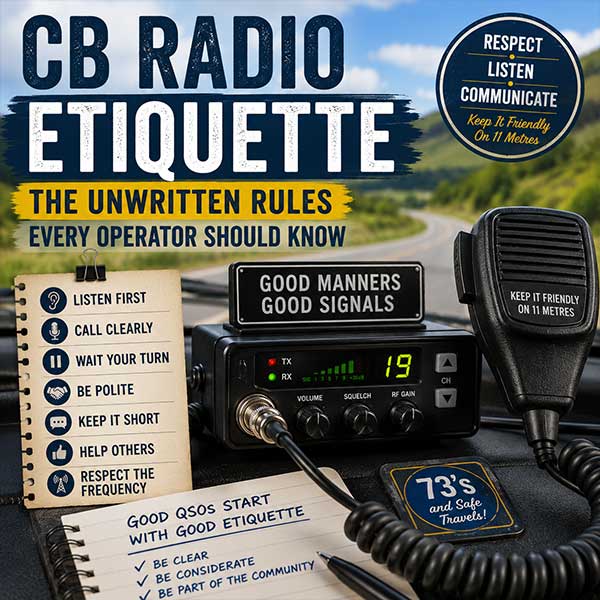
Whether you've just bought your first CB radio or you've been chatting on the airwaves for decades, one thing quickly becomes apparent: the best operators aren't remembered for having the biggest antenna or the most expensive radio. They're remembered because they're friendly, patient, easy to talk to and a pleasure to hear on the air.
Unlike many other radio services, Citizens' Band (CB) radio has relatively few formal operating rules beyond those laid down by regulators. Instead, the hobby has evolved its own customs and traditions over more than half a century. These unwritten rules—often referred to as CB radio etiquette—help thousands of operators share channels, avoid interference and create an enjoyable experience for everyone.
This guide explains the etiquette that experienced operators follow every day. You'll learn how to call for contacts, join existing conversations politely, operate during busy conditions, minimise interference and build a reputation as someone people genuinely enjoy speaking with. Whether you're using FM around your local area, AM for casual chats or SSB to work stations hundreds or even thousands of miles away, good operating practice makes every QSO better.
If you're completely new to the hobby, you may also enjoy our guides to CB Radio for Beginners, CB Radio Terminology Explained and CB Radio Frequencies Explained.
What Is CB Radio Etiquette?
CB radio etiquette refers to the accepted customs and good manners that operators follow when communicating on the air. Most of these practices are not written into law, yet they have been passed from operator to operator for decades.
Good etiquette is simply about making radio enjoyable for everybody. It encourages respectful conversations, prevents unnecessary interference and helps ensure that channels remain usable even during busy periods.
Some of these habits are remarkably simple:
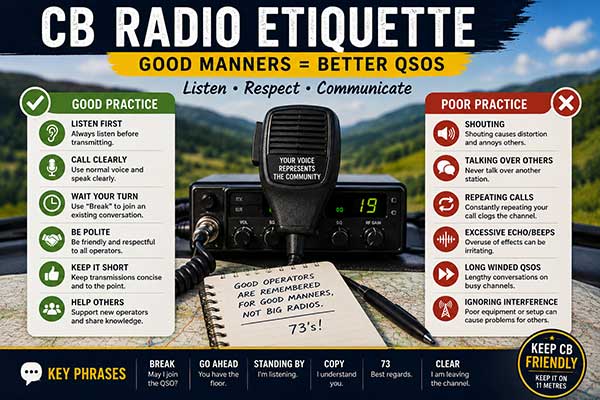
- Listening before transmitting.
- Allowing others to finish speaking.
- Being patient when joining a conversation.
- Keeping transmissions concise.
- Helping newcomers feel welcome.
- Respecting other people's QSOs.
Individually they may seem minor, but together they create the friendly atmosphere that has kept CB radio thriving for generations.
Why Good Operating Practices Matter
Unlike mobile phones, dozens of people may be sharing the same CB channel at any given time. Every transmission temporarily prevents someone else from speaking. Poor operating habits quickly affect everyone listening.
Experienced operators appreciate good etiquette because it:
- Reduces accidental interference.
- Makes conversations easier to follow.
- Allows weaker stations opportunities to join.
- Creates a welcoming environment for beginners.
- Encourages people to return to the hobby.
- Builds a stronger local CB community.
A polite operator with modest equipment will often make far more contacts than someone with an expensive station who constantly interrupts others or monopolises a channel.
The Difference Between Legal Rules and Unwritten Rules
It's important to separate legal requirements from operating etiquette.
Legal rules cover matters such as permitted frequencies, transmitter power limits and approved equipment. These regulations vary between countries and are enforced by communications authorities.
Etiquette, on the other hand, comes from decades of practical experience.
For example, there is usually no law requiring you to wait before transmitting. However, experienced operators know that waiting a couple of seconds allows anyone with emergency or priority traffic to break in before the conversation continues.
Similarly, nobody is legally obliged to welcome newcomers onto a channel, but doing so has always been one of the defining characteristics of a healthy CB community.
To understand the legal side of operating, see our guide to Are CB Radios Legal in the UK?.
Listening Before Transmitting
The single most important habit every CB operator should develop is listening before pressing the microphone.
Many beginners become excited after installing their first radio and immediately start calling without checking whether the channel is already occupied.
Instead, spend at least thirty seconds listening.
Ask yourself:
- Is somebody already having a conversation?
- Is the channel being used for a scheduled net?
- Is there distant skip making the channel unusually busy?
- Are stations talking slowly because signals are weak?
Listening first prevents accidental interruptions and gives you a better understanding of how busy the channel really is.
Choosing the Right Channel
Different channels naturally develop different personalities.
Some become local calling channels. Others are commonly used by mobile operators, while certain frequencies may be popular with DX enthusiasts during favourable propagation.
If a channel sounds consistently busy, consider moving elsewhere rather than trying to squeeze into an already crowded frequency.
Likewise, if you're planning a lengthy conversation with a friend, avoid occupying a well-known calling channel for half an hour when quieter channels are available.
Good operators leave room for others.
Making Your First Call
Many newcomers wonder exactly what they should say when making their first call.
The answer is surprisingly simple.
Speak clearly, avoid shouting and keep your transmission brief.
Example
Good:
"Good afternoon, this is Gandy. Is anybody listening?"
Also good:
"26 Gandy 357 listening on Channel 19. Anyone around for a quick contact?"
Poor practice:
"BREAKER BREAKER BREAKER COME ON EVERYBODY WHERE ARE YOU?"
Long, loud calls rarely produce better results.
Calling CQ Correctly
The term CQ has been used in radio communications for well over a century. It simply means that you are calling any station that may be listening.
Although the phrase originated in amateur radio, it is commonly heard on CB, particularly among SSB operators looking for longer-distance contacts.
Local FM Example
"CQ CQ, this is Gandy calling and standing by on Channel 14."
General Local Contact
"CQ, CQ. Any local stations around this afternoon?"
DX Example
"CQ DX, CQ DX. This is 26 Gandy 357 in England calling CQ DX and standing by."
After calling CQ, pause and listen. Resist the temptation to repeat your call every few seconds.
Radio requires patience.
General Calls vs Calling Specific Stations
There's an important difference between calling anyone and calling somebody in particular.
A general call invites anybody to respond.
"Anyone monitoring this afternoon?"
Calling a specific station is different.
"26UK123, this is Gandy. Are you monitoring?"
If you receive no reply after several attempts, avoid repeatedly calling the same operator for several minutes. They may simply be away from the radio.
Common CB Radio Phrases Explained
CB conversations often include traditional phrases that have become part of radio culture.
Break
Used to politely indicate you would like to join an existing conversation.
Breaker
Historically common on American CB, although today many UK operators simply say "break".
CQ
A general call inviting anyone to respond.
Go Ahead
An invitation for another station to begin speaking.
Standing By
Indicates you've finished transmitting and are listening for replies.
73
A traditional way of saying "best regards".
Copy
Means you have understood or received the transmission.
Over
Common in professional radio services but less frequently needed during casual CB conversations because releasing the microphone naturally indicates you've finished speaking.
Clear
Often used when leaving the frequency completely.
"Thanks for the contact. 73, I'm clear."
While these expressions remain popular, avoid forcing radio jargon into every sentence. Natural conversation is usually easier to understand.
```htmlBreaking Into Conversations
One of the first skills every CB operator learns is how to join an existing conversation without disrupting it. Unlike a telephone call, you cannot simply dial into an ongoing QSO. Instead, you need to wait for an appropriate opportunity and let the existing stations know that you would like to join.
Patience is one of the defining characteristics of an experienced operator. Even if you can hear several people chatting, there will almost always be a natural pause between overs where another station can announce their presence.
Wait for a Natural Gap
Never key up while somebody else is speaking. Even if there appears to be a slight pause, remember that propagation delays or slower operators may mean another station is just about to reply.
Instead, wait until one operator has finished and before the next begins.
Simply Say "Break"
The accepted way to request entry into an ongoing QSO is short and polite.
"Break."
One word is normally enough.
There is rarely any need to shout "Breaker Breaker" repeatedly. While the phrase became famous through American CB culture during the 1970s, most UK operators simply say "break" in a normal speaking voice.
Example of Good Practice
Operator A: "That's interesting. What antenna are you using?"
Operator B: "I'm using a Sirio Performer 5000."
New Operator: "Break."
Operator A: "Station breaking, go ahead."
New Operator: "Good afternoon, thanks. Mind if I join you?"
Simple, polite and effective.
Poor Practice
"BREAKER BREAKER! HELLO EVERYBODY! CAN YOU HEAR ME?"
This often results in several people transmitting at once, creating confusion rather than helping you join the conversation.
When to Wait Before Interrupting
Not every pause means you should immediately transmit.
Experienced operators often leave a second or two between overs deliberately. This gives weaker stations, mobile operators or anyone with important traffic an opportunity to break in.
Likewise, if two operators appear to be exchanging signal reports during a difficult DX contact, it may be better to wait until they have finished before requesting to join.
Good judgement comes with experience, but a useful rule is this:
- Short pause during a lively conversation — wait.
- Clear pause after several exchanges — suitable opportunity.
- Emergency traffic — break immediately.
Knowing When Not to Break In
Sometimes the most courteous decision is not to join at all.
Examples include:
- Stations exchanging emergency information.
- A scheduled radio net in progress.
- Operators completing difficult long-distance contacts.
- Someone helping a beginner with technical advice.
- A weak station struggling through heavy interference.
Waiting another few minutes often leads to a better opportunity without disrupting what is already taking place.
Taking Turns During Longer Conversations
CB radio works best when everyone has an opportunity to contribute.
Long-winded transmissions quickly make conversations feel one-sided, particularly on busy local channels.
Try to keep individual transmissions reasonably short before handing back to another operator.
This allows:
- Questions to be asked.
- Additional stations to join.
- Weak operators to find suitable gaps.
- Emergency traffic to be heard if necessary.
Think of a good QSO as a conversation in a pub rather than a speech from a stage.
Avoiding Talking Over Other Operators
One of the quickest ways to frustrate everybody on frequency is talking over someone else.
This often happens accidentally when propagation changes or signals are weak.
If you realise you've transmitted at the same time as another operator:
- Stop transmitting immediately.
- Allow them to finish.
- Apologise if appropriate.
- Continue once the frequency is clear.
Most experienced operators understand that doubles happen. Constantly trying to "win" the frequency, however, is considered poor operating practice.
Using Plain, Clear Language
Good radio communication isn't about sounding impressive—it's about being understood.
Speak naturally.
There's no need to fill every sentence with ten-codes or radio slang unless everyone involved uses them comfortably.
Instead:
- Use normal conversational English.
- Avoid mumbling.
- Keep sentences concise.
- Pause between thoughts.
- Avoid shouting into the microphone.
Simple language is particularly valuable when signals are weak or fading.
Speaking at the Right Speed
New operators often make one of two mistakes.
They either speak far too quickly through nerves or painfully slowly because they believe "radio voices" should sound different.
The ideal speaking speed is simply your normal conversational pace.
Imagine you're talking to somebody sitting in the passenger seat of your vehicle.
That pace usually produces the clearest audio.
Using Callsigns and Handles Correctly
Different operators identify themselves in different ways.
Some use club-issued callsigns.
Others prefer personal handles.
Many use both.
For example:
"26 Gandy 357, operator Andy."
Once introductions have been made, there's no need to repeat your callsign every sentence.
Most operators identify themselves naturally every few overs or when joining or leaving a conversation.
This makes it easier for anyone listening to keep track of who's speaking.
Respecting Busy Channels
Every area develops its own commonly used channels.
Some become local calling frequencies, while others regularly host organised nets or evening rag-chews.
If you discover that several operators are already using a channel, consider whether your own conversation might be better suited elsewhere.
Moving to a quieter frequency after making initial contact is common courtesy, particularly if you're expecting a lengthy discussion.
This keeps popular channels available for new callers.
Helping New Operators Feel Welcome
Every experienced operator was once the nervous newcomer making their very first call.
The first response someone receives often determines whether they continue enjoying the hobby.
If you hear somebody struggling:
- Answer their CQ.
- Speak slowly.
- Offer encouragement.
- Avoid criticising basic mistakes.
- Answer questions patiently.
Many lifelong friendships within the CB community began because an experienced operator took a few extra minutes to help someone new.
Communities grow strongest when knowledge is shared freely.
Examples of Good and Poor Operating Practice
Good Example – Calling for Contacts
"Good evening. This is 26 Gandy 357 listening on Channel 19. Anybody around for a contact? Standing by."
Short, clear and easy to understand.
Poor Example
"COME ON EVERYBODY! ANYBODY GOT A COPY? HELLO HELLO HELLO..."
Repeating yourself loudly rarely increases your chances of receiving a reply.
Good Example – Responding to CQ
"Gandy, this is 26UK873. Good afternoon. I copy you well."
The calling station immediately knows who is responding.
Good Example – Joining an Existing QSO
Operator A: "Go ahead, Dave."
New Station: "Break."
Operator A: "Station breaking, go ahead."
New Station: "Thanks very much. Mind if I join you?"
Everyone remains organised and no one feels interrupted.
Good Example – Handling Weak Signals
"You're dropping into the noise a little. I copied your handle but missed the location. Could you repeat that please?"
Rather than pretending to understand, experienced operators politely ask for clarification.
Finishing a QSO
Conversations should end just as politely as they begin.
"Thanks very much for the contact. Lovely speaking with you. 73 and hopefully catch you again soon. I'm clear."
Simple, friendly and professional.
Remember: Reputation Travels Further Than Your Signal
Within local CB communities, operators quickly become known—not because of their antenna or transmitter, but because of how they treat others.
The stations that receive the warmest welcomes are almost always those who listen carefully, wait patiently, encourage newcomers and show respect for every operator regardless of equipment or experience.
Modern platforms such as CB Radio Logbook make it easier than ever to record QSOs, discover organised radio nets, keep track of contacts and connect with fellow operators away from the microphone. However, the conversations you log will always begin with good manners on the air.
```htmlAvoiding Interference
One of the most important aspects of good CB radio etiquette is doing everything possible to minimise interference. While some interference is unavoidable—particularly during periods of strong propagation—a great deal can be prevented through good operating practice and properly adjusted equipment.
Remember that every operator is sharing a limited number of channels. A little consideration goes a long way towards keeping them usable for everyone.
Accidentally Transmitting Over Another Station
Even experienced operators occasionally "double" with another station, meaning two people begin transmitting at the same time.
If this happens:
- Release the microphone immediately.
- Allow the other station to finish.
- Apologise if necessary.
- Continue once the channel is clear.
Most operators understand that doubles happen naturally, particularly during skip conditions or when signals are weak. Persistently trying to talk over others, however, quickly earns a poor reputation.
Busy Channels
Some channels naturally become gathering places for local operators or organised nets. If you hear continuous conversation, consider whether another channel might be more suitable before beginning a lengthy discussion.
Likewise, if you've made contact on a busy calling channel and expect to chat for twenty minutes, it's courteous to suggest moving elsewhere.
"Shall we move to Channel 32 and leave this one free?"
This simple gesture helps keep calling channels available for everyone.
Adjacent Channel Splatter
If your transmitted audio is excessively wide, it can spill onto neighbouring channels. This is known as adjacent channel splatter and can make nearby frequencies difficult to use.
Common causes include:
- Overdriven microphones.
- Excessive microphone gain.
- Poor-quality modified equipment.
- Faulty transmit audio stages.
Good audio should be clear—not painfully loud.
Excessive Microphone Gain
Many radios include microphone gain controls, and aftermarket power microphones remain popular with some operators.
More gain does not necessarily mean better audio.
If the microphone is driven too hard, your voice becomes distorted and difficult to understand. Instead of sounding stronger, you may simply occupy more bandwidth and cause unnecessary interference.
Ask trusted local operators for honest audio reports rather than assuming louder is better.
Poorly Tuned Equipment
Good etiquette extends beyond your operating style.
Keeping your equipment properly maintained helps protect both your own radio and everyone else sharing the band.
Always ensure:
- Your antenna has an acceptable SWR.
- Coaxial cables are in good condition.
- Power connections are secure.
- Your radio remains within legal operating specifications.
Well-maintained equipment produces cleaner signals and fewer problems for neighbouring operators.
Sharing Channels During Busy Periods
During periods of excellent propagation, dozens of stations from across Europe may appear on a single channel.
At these times:
- Keep transmissions short.
- Avoid unnecessary overs.
- Allow pauses between transmissions.
- Give weaker stations opportunities to reply.
Patience becomes particularly valuable when conditions are crowded.
Avoiding Excessive Roger Beeps and Echo
Modern CB radios often include features such as Roger beeps, echo effects and voice processors.
Used sparingly, they can add a little personality.
Used excessively, they quickly become irritating.
A Roger beep after every transmission during a long conversation soon becomes repetitive, while excessive echo can make perfectly good audio difficult to understand.
Many experienced operators prefer clean, natural audio that allows conversations to flow comfortably.
If you choose to use these features, moderation is the key.
Good DX Etiquette During Skip Conditions
When propagation opens across Europe or beyond, operating practices naturally change.
Stations may be competing to work the same rare location, and signals often fade rapidly.
Good DX etiquette includes:
- Keeping overs short.
- Giving concise signal reports.
- Avoiding unnecessary local chat on active DX channels.
- Listening carefully before calling.
- Calling once rather than repeatedly shouting over others.
During major openings you'll often hear operators calling:
"CQ DX, CQ DX, this is 26 Gandy 357 in England standing by."
After making contact, avoid lengthy conversations if other stations are waiting. Exchange the essential information before allowing others their opportunity.
For a deeper explanation of propagation, see our article Understanding Skip on 11 Metres.
Net Etiquette
Organised radio nets operate slightly differently from casual QSOs.
A net usually has a designated Net Controller who coordinates check-ins and manages the flow of conversation.
Good net etiquette includes:
- Listening before checking in.
- Waiting until invited to transmit.
- Keeping reports concise.
- Avoiding side conversations.
- Following the Net Controller's instructions.
If you miss part of the procedure, simply wait for an appropriate opportunity rather than transmitting over the controller.
Radio nets are designed to keep larger groups organised, and following the established format helps everyone participate smoothly.
You can discover organised nets through local clubs or by using the Net directory within CB Radio Logbook.
Mobile Operation Etiquette
Operating from a vehicle introduces additional challenges.
Your primary responsibility is always driving safely.
Good mobile operating practice includes:
- Keeping transmissions brief.
- Avoiding complex conversations in heavy traffic.
- Not attempting to adjust equipment while driving.
- Using hands-free microphones where appropriate.
- Pulling over safely before making significant adjustments.
If another operator realises you're mobile, they'll often naturally keep transmissions shorter to make life easier.
Emergency Traffic Procedures
Although CB radio is primarily used recreationally today, it can still prove valuable during emergencies where other communications are unavailable.
If you hear genuine emergency traffic:
- Stop transmitting immediately.
- Allow emergency communications priority.
- Avoid unnecessary comments.
- Offer assistance only if you can genuinely help.
If you yourself require urgent assistance, state clearly that you have emergency traffic rather than attempting to force your way into unrelated conversations.
Most operators will immediately give priority to genuine emergencies.
Common Beginner Mistakes
Every experienced operator made mistakes when starting out. Fortunately, most are easy to correct.
- Talking before listening.
- Calling continuously without pausing.
- Holding the microphone too close.
- Speaking far too quickly.
- Interrupting existing QSOs.
- Using echo and Roger beeps excessively.
- Ignoring poor SWR readings.
- Trying to dominate conversations.
- Forgetting that everyone shares the same channels.
- Being afraid to make the first call.
The last point is perhaps the most common of all.
Every operator remembers making their first CQ. Most people listening are pleased to hear a new voice on the air and will happily respond.
Top 20 CB Etiquette Tips
- Listen before transmitting.
- Keep transmissions concise.
- Wait for natural pauses.
- Say "Break" politely when joining a QSO.
- Don't talk over other operators.
- Use clear, natural speech.
- Avoid shouting into the microphone.
- Respect busy channels.
- Move lengthy conversations elsewhere.
- Keep microphone gain correctly adjusted.
- Use Roger beeps sparingly.
- Avoid excessive echo effects.
- Maintain your antenna and SWR.
- Help newcomers feel welcome.
- Be patient during DX openings.
- Follow Net Controller instructions.
- Drive safely when operating mobile.
- Give emergency traffic immediate priority.
- End conversations politely with "73".
- Remember that good manners travel further than any signal.
Frequently Asked Questions
What is the most important rule of CB radio etiquette?
Always listen before transmitting. This prevents accidental interruptions and helps you understand what is happening on the channel before joining in.
What does "Break" mean on CB radio?
"Break" is a polite way of indicating that you would like to join an existing conversation when an appropriate pause becomes available.
Should I always call CQ?
No. For local contacts, simply asking whether anyone is listening is often perfectly acceptable. CQ is more commonly heard during SSB and DX operation.
Can I interrupt another conversation?
Only during a suitable pause or if you have genuine emergency traffic. Otherwise, wait patiently for an opportunity to join.
Is it rude to use echo or Roger beeps?
Not necessarily, but excessive use can become distracting. Most experienced operators prefer clean, natural audio.
How should I end a CB conversation?
Thank the other operator, wish them well, and sign off with "73" or "best regards" before leaving the channel.
Do I need to use a callsign?
Many operators use callsigns, club identifiers or personal handles. Whichever you choose, identifying yourself periodically makes conversations easier to follow.
What's the best way to improve my operating skills?
Spend time listening to experienced operators. You'll quickly learn the rhythm, courtesy and traditions that have shaped CB radio for decades.
Further Reading
- CB Radio Terminology Explained
- CB Radio for Beginners
- Radio Nets Explained
- Understanding Skip on 11 Metres
- CB Radio Frequencies Explained
- Are CB Radios Legal in the UK?
Related articles
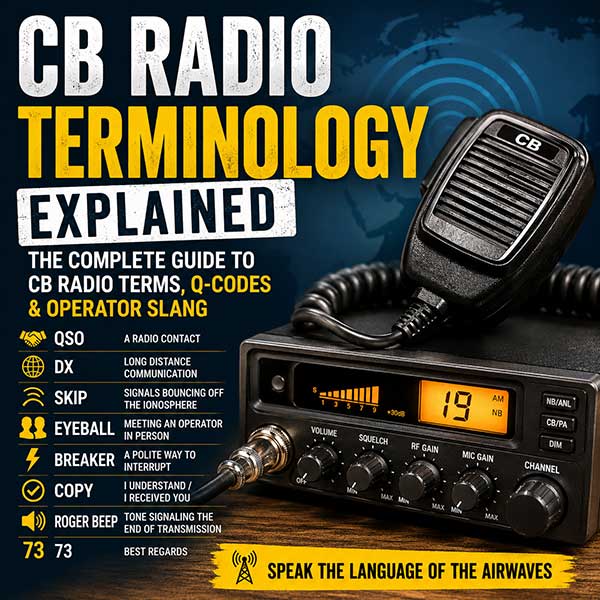
CB Radio Terminology Explained: The Complete Guide to CB Radio Lingo, Q-Codes and Operator Slang

Understanding the Net System: How Scheduled CB Nets Work and Why They're Worth Joining
Discover how the Net system in CB Radio Logbook works — from recurring schedules and timezone-aware times to public and invite-only sessions — and the real benefits of joining or hosting scheduled CB radio nets.
Join the CB Radio Logbook
Track every QSO, map your contacts, and connect with operators near you. Create your free account and get on the air.
Create your account